PRETORIA BOYS HIGH SCHOOL – A TRIBUTE TO MR BILL SCHRODER
A GIANT TREE HAS FALLEN IN THE BOYS HIGH FOREST
The wider Boys High community is this week mourning the passing of Bill Schroder, headmaster of the school from 1990 to 2009. Bill Schroder passed away in Pretoria on 26th May after complications arising from surgery.
Bill Schroder’s career in education spanned 43 years, but there can be no doubt that his twenty years as headmaster of Pretoria Boys High represented the pinnacle of his achievements and came to mean the most to him. A giant tree has fallen in the Boys High forest.
Bill Schroder took over the reins of Boys High at a time of monumental change in the country. Navigating the transition from a Transvaal Education Department school to a Gauteng Department of Education school after 1994 showed Bill Schroder’s ability to balance tradition with pragmatism. He shrewdly understood that a school with such extensive grounds would be expected to play a bigger part in contributing to education in the new province and he firmly believed that Boys High had a moral obligation to do so. But he was equally adamant that this should not result in the compromising of standards.
To smooth the path to a multicultural school where many of the initial intake would have been through township primary schools that provided a less-than-ideal grounding, a bridging programme known as ‘Pre-Form One’ was established. This was a unique initiative for a state school and won Boys High much kudos.
The transfer of the old Art, Ballet and Music School buildings to Boys High in 1993 came at a fortuitous juncture as it made possible the expansion of the school population. The old Pro Arte facility was renamed Pollock Campus and converted to serve the needs of Boys High. Consequently, Bill Schroder took the bold decision to grow the school by about a third, taking the total numbers of boys to over 1500 and making PBHS the largest all boys school in South Africa.
The risk associated with a significantly expanded school was that pastoral care would suffer, but Bill Schroder had a clear vision as to how this could be obviated. He created two pairs of new dayboy houses, in 1991 and again in 1996. These sweeping changes, initiated even before the school grew in size, became the fundamental core structures of the school going into the current century. The strong house system not only served to look after the interests of boys, but acted as an important training ground for the housemasters, many of whom would go on to serve as deputy headmasters at the school and as headmasters at other schools.
In order to increase the number of boarders, a central dining room was erected in 1995 and the space freed up within the houses was converted into new dormitories and staff accommodation. This made possible boarding houses that were more comparable in size to the day houses in terms of pupil numbers.
Bill Schroder’s headmastership saw an extensive programme of improving the facilities at the school. Two new sports fields were added through arrangements with building contractors who dumped and levelled soil from local construction sites. One of these also resulted in the construction of a rugby pavilion. The centre of the athletics track area was used for the addition of an artificial hockey surface. The cricket pavilion (now Sommerville Pavilion) was extensively refurbished and a new scoreboard building was constructed on the opposite side of Hofmeyr Oval. The school gained a water polo pool after Bill worked his powers of persuasion with a generous old boy. A new clothing shop and tennis clubhouse were also added to facilities.
Beyond the school grounds, an audacious innovation was the creation of a Bush School experience for Form Two boys when it seemed likely that a farm would be donated to the school in the western Magaliesberg. This Bush School legacy continues today, albeit at a new venue.
Merely cataloguing the material changes at Boys High does not fully encapsulate the headmaster that Bill Schroder was to his pupils and staff. He had an uncanny understanding of the potential and the fallibility of adolescent boys, many of whom he personally counselled. The rapport he developed with “his” boys was evident not only while they were at school, but at the many old boys’ dinners across South Africa and the world. He tirelessly worked to maintain ties with the school’s alumni through the annual reunions he created for year groups, hosted at the school, and by way of dinners in major centres.
Boys High staff came to know Bill Schroder as a man who they could rely on to support them in both their professional and personal lives. He backed staff in their initiatives and in occasional disputes with the Department of Education. He encouraged staff who wanted to apply for promotion posts at other schools or be part of exchange programmes with overseas schools. Many staff would come to appreciate him as a headmaster with a big heart who would stand by them when facing personal hardship, be it poor health, bereavement or some other misfortune.
Bill Schroder had a real appreciation of the history of the school and ensured that this heritage would be recorded and preserved. He commissioned the writing of the school’s history in 2000 as part of celebrating the school’s centenary the following year. In 2009 the new school museum was opened to coincide with the centenary of the original school buildings. To inculcate a culture of respect for those of the school who deserved to be remembered, he introduced the traditions of the daily sounding of the last post and an annual Founders Day.
The place occupied by boys’ schools in the educational landscape of South Africa was something which Bill Schroder knew required nurturing. To this end he undertook the recruiting of sufficient male staff, encouraging old boys to enter the profession through the creation of learnerships. He also established an association of state boys’ schools that met annually.
After his retirement, Bill took on the management of the largest fundraising initiative in the history of the school. The campaign, launched in 2011, was intended to finance the construction of an entirely new school hall and in the converted old hall, the creation of a new library, music department facility and auditorium. His efforts in raising millions from the alumni of the school and other donors meant that construction could begin in 2014. Building plans had been altered by this stage and the existing hall was extensively refurbished to allow for a greater seating capacity. This was made possible entirely through funding which Bill secured from donors. The new Abernethy Hall was opened in 2015.
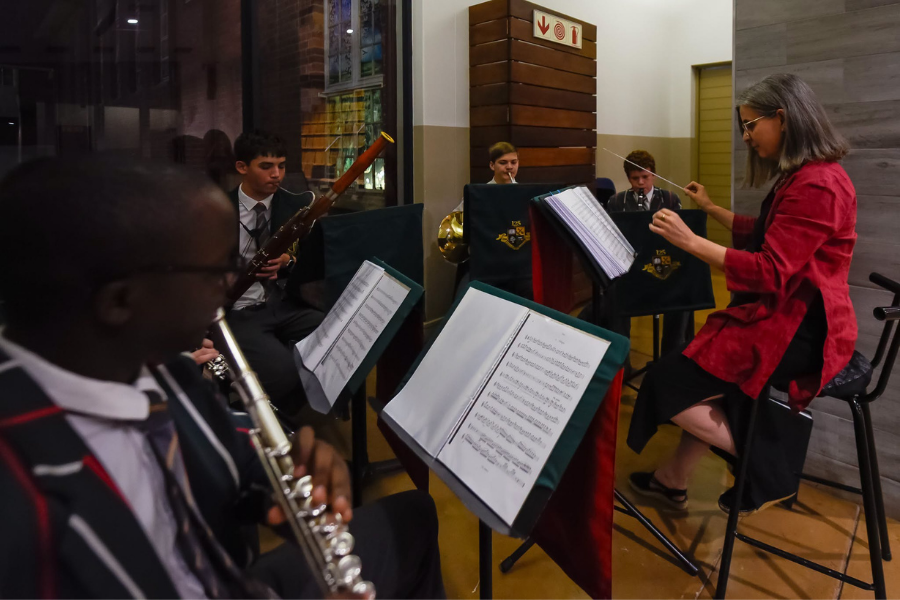
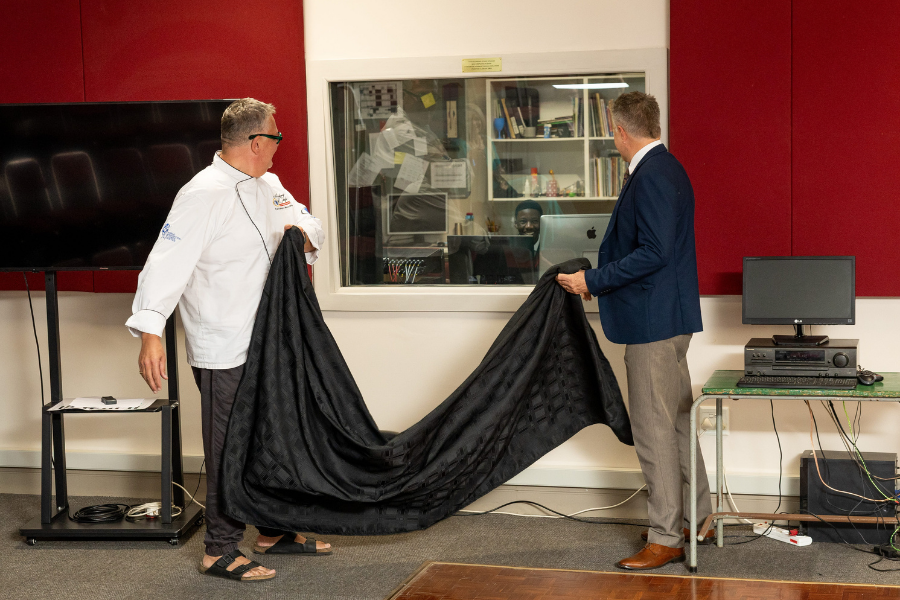
A second phase of construction saw the completion of a new double storey building in 2016, partly financed through the fundraising efforts of Bill Schroder. This new facility housed the school’s library and music department and when opened in 2016 was named the Bill Schroder Centre. Bill and his beloved Cherry did the honours at the opening ceremony.
Sadly, the following year saw the passing of Cherry who had been Bill’s wife for fifty years. She had been a devoted partner whose support was an integral part of his successful career. The couple had three children, Glenn, Tracey and Bradley, two of whom would have Boys High connections. Tracey worked at the school for some years as the person responsible for housekeeping in the boarding houses, as well as having a son, Liam, attend the school. Bradley finished the last years of his schooling at PBHS.
Aside from his continued efforts on behalf of Boys High, Bill Schroder also assisted a high school in Mamelodi in an advisory capacity and served on the body corporate of the complex where he lived. While remaining a keen bridge player, he managed to complete the writing of his autobiography, A Headmaster’s Story, published in 2019. Appropriately, the book launch took place in the atrium of the Bill Schroder Centre at the school.
Bill Schroder took a keen interest in his alma mater Rondebosch Boys High as well as Pretoria Boys High, the latter facilitated by him not living too far from the school. This allowed him to attend many of the school’s sporting and cultural events. In 2023 he was the guest speaker at the Founders Day assembly and regaled the audience with stories of his time at the school.
Bill Schroder’s involvement with the school continued right up to the end of his life as he worked to raise money for bursary funds and other school projects. He attended many of the old boys’ dinners held in Pretoria and just a few months ago on a trip to the Western Cape, was able to enjoy a luncheon with past staff now living in that province.
While the Boys High community is obviously most attuned to the major contribution he made to this school, it must not be forgotten that Bill Schroder had served education in the then Cape Province across three decades prior to his appointment in Pretoria.
William Edward Schroder was born in 1944 in George and attended Rondebosch Boys High where he was chosen as head prefect in his matric year of 1961, at 16 the youngest pupil ever to assume the role. He went on to study at the University of Cape Town before taking up his first teaching post at Western Province Preparatory School. He later taught English and Latin at SACS and at Rondebosch where he became head of the English Department. In 1978 he became vice principal of York High in George before returning to Cape Town in 1982 as a deputy headmaster at Westerford High School. Two years later he was appointed as headmaster at Rhodes High School in Cape Town and then spent a year as headmaster of Pinelands High in 1989. All of these institutions benefited from the time that Bill Schroder spent there.
Pretoria Boys High is proud to acknowledge the immense, and in many ways immeasurable, contribution Bill Schroder made in shaping our school and the lives of those who passed through its corridors during his time.
As the school tries to come to terms with the loss it has suffered, we extend our sincere condolences to the family and friends of Bill Schroder across the country and the globe.
Mr John Illsley
Photo Credit: Henry Brink