
A discussion I recently heard on the radio compelled me to respond.
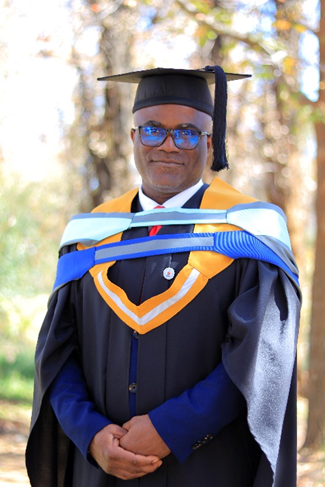
A teacher and his many belts. (Engr E. Owolabi)
Should we even be asking whether teaching is a profession? No one asks whether doctors, engineers, or lawyers constitute a profession (Challen, 2007). Interestingly, engineers are increasingly drawing on teaching and learning philosophies in the development of machines and artificial intelligence. Concepts such as reinforcement learning, supervised learning, and unsupervised learning are grounded in educational theory. Contemporary software engineering practices at organisations such as Microsoft now prioritise machine teaching alongside machine learning, drawing direct inspiration from traditional teaching methodologies prevalent in education.
Simard posits that machine teaching shifts focus from algorithmic development to the effectiveness of the “teacher” (Simard et al., 2017). The deliberate use of the term teacher, borrowed from the teaching profession, is noteworthy. This approach extends principles from software engineering and programming languages, prioritising the teacher’s interaction with data, as well as key elements such as interaction techniques and visualisation design. Engineers invest considerable time, energy, and expertise in understanding the complexities of teaching and learning in order to instruct machines effectively. Despite this rigorous intellectual effort, there remains a persistent tendency to question the competence and professional standing of teachers themselves. This contradiction is troubling.
Nelson Mandela famously stated, “Education is the most powerful weapon which you can use to change the world.” He further noted that “a good head and a good heart are always a formidable combination. But when you add to that a literate tongue or pen, then you have something very special” (Campbell, 2023). Education is not merely special; it is powerful. One need only imagine an illiterate world, or a national leader entrusted with nuclear codes yet unable to comprehend the written instructions before them.
It is important to clarify that intelligence is distinct from literacy. However, literacy is a fundamental subset of education, and education is facilitated through teaching. As Long aptly observed, “Education is the one profession that creates all other professions” (Long, 2022). Every other profession must, by necessity, be taught by a teacher.
The Australian Council of Professions (Professions, 2023) defines a profession as one composed of individuals who adhere to ethical standards, possess specialised knowledge and skills acquired through extensive education and research, and are recognised by the public. Professionals apply their expertise in the service of others, and professionalism is widely regarded as an indicator of integrity, ethics, trust, and competence.
Similarly, the Cambridge Dictionary (2024) defines a profession as “any type of work that needs special training or a particular skill, often one that is respected because it involves a high level of education, skill and training.” While many professions, such as medicine and law, operate largely on a fee-for-service basis, remuneration alone does not define professional status.
There is broad consensus across the literature regarding what constitutes a profession. Beyond definitions, it is useful to examine the core characteristics of professionalism. Herrity (2023) identifies approximately fifteen such characteristics, several of which are particularly relevant:
- Professional appearance – appropriate grooming, attire, and hygiene.
- Reliability – dependability and the consistent fulfilment of commitments.
- Ethical behaviour – honesty, integrity, openness, and sincerity.
- Organisation – maintaining structure and a conducive working environment.
- Accountability – accepting responsibility not only for success but also for failure, and actively pursuing corrective action where necessary.
Complementing Herrity’s framework, Robinson (2020) further identifies defining features of professional practice that resonate strongly with teaching. These include extensive academic preparation, deeply embedded professional values, clear obligations to society, service as a foundational pillar of social development, and membership in professional bodies that safeguard professional autonomy and standards.
Traditionally, a professional is defined as “someone who derives their income from their specialised knowledge or experience, as opposed to a worker, hobbyist, or amateur without formal education” (Professions, 2023). Evetts (2011) further emphasises that professionals are members of recognised professional bodies, adhere to ethical standards, are accountable and altruistic, and serve their communities with dignity and skill.
By these measures, teaching clearly qualifies as a profession. Teachers acquire specialised expertise through formal training and continuous professional development, rather than merely earning an income from routine labour. Moreover, affiliation with recognised professional bodies—such as the South African Council for Educators (SACE)—demonstrates a formal commitment to professional standards, ethics, and accountability.
Marshall (1957) described teaching as a noble and honourable profession, characterised by humility and a commitment to nurturing learners into productive members of society. However, he also argued that teaching’s professional status depends heavily on teachers demonstrating professional attitudes and on societal perceptions of the profession. Media organisations form part of this society, and long-standing misconceptions about teaching may have influenced public opinion.
Some of these perceptions can be traced back to the apartheid era. IvyPanda (2019) highlights how racially discriminatory policies resulted in unequal resource allocation, disparities in teacher training, and poor working conditions for non-white teachers. Personal accounts from those who lived through this period suggest that teaching was often regarded as a second-rate profession, in part because it was predominantly occupied by women. During apartheid, teachers were seldom afforded the recognition they deserved; instead, teaching was frequently viewed as supplementary employment rather than a position of authority or influence. These historical injustices have had lasting effects, contributing to ongoing scepticism, undervaluation, and diminished trust in the education system.
In contemporary media discourse, disproportionate attention is often given to teachers’ mistakes or isolated incidents of poor practice, while exemplary teaching receives far less coverage. Media organisations have a responsibility to counterbalance this narrative. If teachers are to reclaim their professional stature, societal support—including responsible media representation—is essential.
Despite variations in entry requirements across different regions of the world, which may affect perceptions of professional parity, teachers play a vital role in society that extends far beyond the classroom. Limited autonomy—stemming from state-prescribed curricula and policy frameworks—can influence perceptions of professionalism. Nevertheless, teachers undergo rigorous training to develop both content knowledge (CK) and pedagogical content knowledge (PCK), equipping them for their responsibilities in a manner comparable to other professions.
Public perception continues to affect teachers’ prestige, remuneration, and opportunities. However, teaching is governed by ethical codes and professional standards, just like medicine, law, and engineering. Teachers themselves must also actively cultivate self-respect and professional confidence, reinforcing the value of their work in the eyes of society.
Teaching is unquestionably a profession—one marked by humility and profound influence on the future of any nation. I therefore urge media outlets, particularly those that have previously questioned this issue, to approach the topic with objectivity and balance. Recognising teachers as professionals would not only challenge entrenched misconceptions but would also require collective societal support, increased awareness, and the reorientation of all stakeholders, including teachers themselves. Ultimately, the affirmation of teaching as a profession depends on this shared commitment.
References
Anderson, E. (2024). My teaching philosophy. Retrieved from https://stearnscenter.gmu.edu/wp-content/uploads/2014-TEA-Statement-Anderson-Eric.pdf
Anon. (2022, May 18). Creating your own teaching philosophy. Retrieved from Youtube: https://www.youtube.com/watch?v=0JaeIqcqBZY
Black P. & Wiliam D. (1998). Inside the black box: Raising standards through classroom assessment. (Vol. 80(2)). London: Routledge .
Brookhart, S. M. (2007). J. H. McMillan (Ed.), Formative classroom assessment: Theory into practice. Teachers College Press.
C. Botha et al. (2020). Towards thriving not just surviving. (C. B. al, Ed.) Pretoria, Gauteng, South Africa: Van Schaik.
C. Okeke et al. (2016). Learn to teach: An handbook for teaching practice. Cape Town: Oxford Press South Africa.
Campbell, S. (2023, June 26). Edvoy. Retrieved from https://edvoy.com/articles/how-nelson-mandela-impacted-global-education/: https://edvoy.com/articles/how-nelson-mandela-impacted-global-education/
Challen, C. (2007, February 13). Christine Challen. Retrieved from BERA Blogpost: https://www.bera.ac.uk/blog/teaching-a-job-or-a-profession
Chan F. P. H. (2024). Writting a teaching phylosophy statement. Retrieved from Centre for Teaching and Learning: https://teaching.uwo.ca/awardsdossiers/teachingphilosophy.html
Dictionary, C. (2024, 03 11). Dictionary. Retrieved from Cambridge Dictionary: https://dictionary.cambridge.org/
Du Plessis, A. (2024, 03). PPF Theme3 week 4. Pretoria, Gauteng, South Africa.
Evetts, J. (2011, 10). Sociological Analysis of Professionalism: Past, Present and Future. Comparative Sociology, 10.
Government, S. A. (1996, November 6). South African School Act No 84 of 1996. Pretoria, South Africa.
Government, T. S. (1996, May 8). saconstitution-web-eng. Retrieved from The Doj & cd: https://www.justice.gov.za/legislation/constitution/saconstitution-web-eng.pdf
GSI. (2019). Overview of learning theories. Retrieved from Berkeley.edu: https://gsi.berkeley.edu/gsi-guide-
contents/learning-theory-research/learning-overview/
Heritage M. (2007). Formative assessment: What do teachers need to know and do? (Vol. 80(2)). Phi Delta Kappan,.
Herrity, J. (2023, 03 11). 15 Characteristics of Professionals. Retrieved from Indeed.com: https://www.indeed.com/career-advice/career-development/professional-characteristics
IvyPanda. (2019, September 20). Impact of Apartheid on Education in South Africa. Retrieved from ivypanda.com: https://ivypanda.com/essays/apartheid-2/
J. Mueller. (2018, July 1). Authentic assessment tollbox. Retrieved from Authentic assessment tollbox: https://jonfmueller.com/toolbox/index.htm
Long, B. T. (2022, May 26). Education, A Sacred Profession: The prepared remarks of Dean Bridget Long for Commencement 2022. Retrieved from Havard Graduate School of Education: https://www.gse.harvard.edu/ideas/news/22/05/education-sacred-profession
Marshall M. S. (1957). Improving College and University Teaching. JSTOR, 5(4), 88-92. Retrieved from http://www.jstor.com/stable/27561830
Paul B. & Dylan W. (1998). Assessment and Classroom Learning. Assessment in Education: Principles, Policy & Practice, 5(1), 5. doi:https://doi.org/10.1080/0969595980050102
Professions, A. C. (2023, 03 09). Australian Council of Professions. Retrieved from what-is-a-professional: https://professions.org.au/what-is-a-professional/
Robinson, K. ( 2020. ). Nature of Teaching and Teaching as a Profession. Alberta : Alberta Teachers’ Association.
SACE. (2021). Code of professional ethics. Pretoria: South Africa Council for Educators.
Simard P. Y. et al. (2017, Aug 11). Machine Teaching: A New Paradigm for Building Machine Learning Systems. Microsoft Research.
Wiggins, G. (1990). The Case for Authentic Assessment. Practical Assessment, Research & Evaluation. Retrieved from http://PAREonline.net/getvn.asp?v=2&n=2.


